
Pench National Park is located in the Seoni and Chhindwara districts of Madhya Pradesh, along the border with Maharashtra, and forms an important part of the Satpura Hills landscape. Named after the Pench River, which flows through the heart of the park, this river serves as the lifeline of the region’s rich wildlife, especially its tiger population.
As one of India’s most popular tiger reserves, Pench National Park attracts wildlife lovers from across the country for its open teak forests, high tiger density, and scenic jungle safaris. The park is home to diverse flora and fauna, well-managed core and buffer zones, and offers visitors one of the finest wildlife safari experiences in Central India.
One of India’s most popular national parks, Pench National Park is close to two popular states, Maharashtra and Madhya Pradesh, so not to worry about. You can travel by Plane, rail, and road to Jabalpur in Madhya Pradesh and Nagpur in Maharashtra to Pench National Park.
Nearest airports: Nagpur (92 km) and Jabalpur (190 km).
Nearest railway stations: Seoni, Nagpur, and Jabalpur.
Well-connected by road from Nagpur, Jabalpur, Seoni, and major cities of Madhya Pradesh and Maharashtra
Pench National Park is characterized by dry deciduous and mixed teak forests, forming one of the most scenic forest landscapes in Central India. The vegetation is dominated by teak trees, which cover nearly one-fourth of the forest area and provide ideal habitat for wildlife.
Other prominent plant species found in Pench include salai, tendu, saja, mahua, palash, and moyan. Along the riverbanks of the Pench River and seasonal streams, trees such as Arjuna (Kahua), Jamun, Gular, and bamboo groves are commonly seen. The old village resettlement areas feature open forest patches interspersed with grasslands, which support a rich prey base for large carnivores.
The park also supports over 80 species of grasses and bamboo, playing a crucial role in sustaining herbivores like deer, gaur, and antelope.
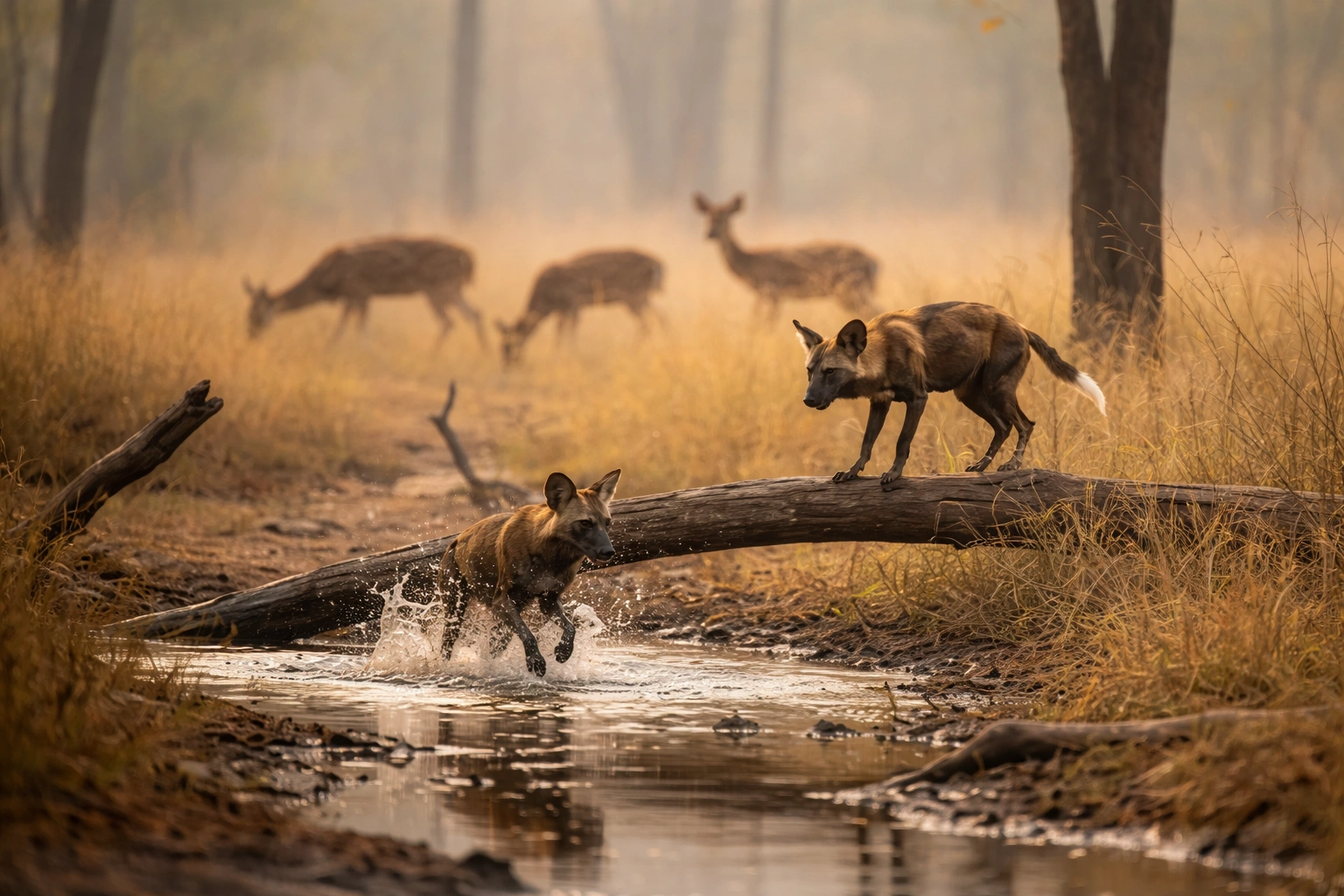
Pench National Park is renowned for its diverse wildlife, especially its population of Royal Bengal Tigers, which are the main attraction of the reserve. Other major carnivores found in the park include leopards, Indian wild dogs (dholes), striped hyenas, jackals, foxes, jungle cats, and small Indian civets.
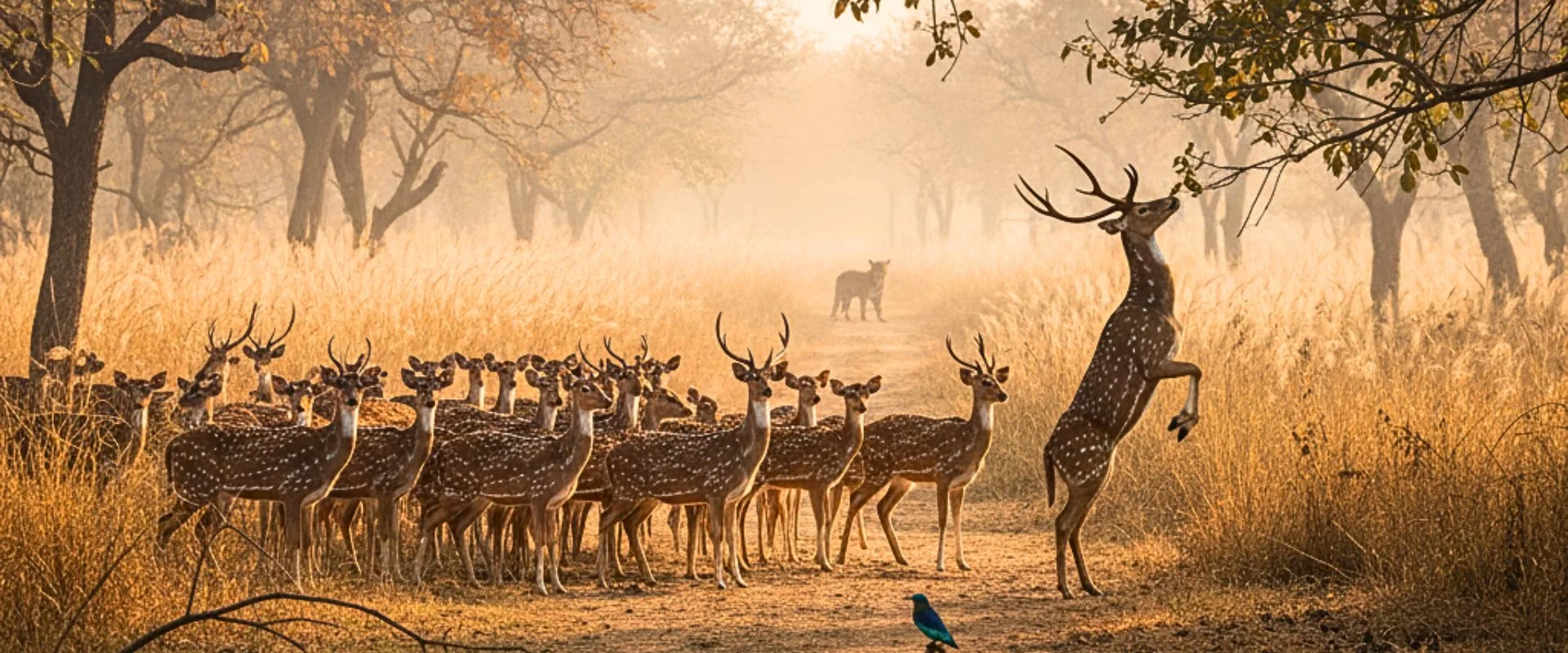
Among herbivores, Pench is home to gaur (Indian bison), sambar, chital (spotted deer), nilgai, chinkara, four-horned antelope (chousingha), and wild boar, which form a strong prey base for predators.
Pench is also a paradise for bird watchers, with over 325 species of resident and migratory birds recorded. The Totladoh Reservoir, located within the park boundaries, attracts numerous migratory birds during the winter season, including common shelduck, bar-headed goose, whistling teal, and various species of waterfowl and raptors.
Pench National Park is one of India’s most famous tiger reserves, celebrated for its high tiger density, scenic teak forests, and rich wildlife diversity. Located on the border of Madhya Pradesh and Maharashtra, Pench forms an important part of the Central Indian Tiger Landscape, making it a prime destination for wildlife enthusiasts, photographers, and nature lovers.
One of the biggest reasons Pench National Park is famous is its association with Rudyard Kipling’s The Jungle Book. The park’s dense forests, open meadows, and riverine landscapes are believed to have inspired the legendary setting of Mowgli’s jungle, giving Pench a unique cultural and literary significance that sets it apart from other tiger reserves in India.
Pench is particularly renowned for its excellent tiger sighting opportunities. The park’s open teak forests and grasslands offer better visibility compared to dense jungle reserves, increasing the chances of spotting Royal Bengal Tigers during jeep safaris. Along with tigers, Pench is home to leopards, wild dogs (dholes), sloth bears, gaur, sambar, chital, and over 325 species of birds, making it a biodiversity hotspot.
Another factor that makes Pench famous is its well-managed safari zones, such as Turia, Karmajhiri, and Jamtara, which are known for consistent wildlife sightings and well-regulated tourism. The presence of buffer zones and night safaris further enhances the visitor experience by offering diverse ways to explore the forest ecosystem.
With its combination of natural beauty, rich wildlife, historical significance, and responsible tourism practices, Pench National Park stands as one of the best tiger safari destinations in India, attracting wildlife lovers from across the country and around the world.
In Pench National Park there are many options to explore. During your visit to the park, you can also get all in one tour package where you can enjoy all these activities. Being a small part of Madhya Pradesh since it lies in Seoni and Chhindwara districts, Pench has always been a huge contribution to the state’s tourism industry and wildlife, which allows every visitor a great opportunity to explore it in depth. here is a list of activities you can take part in.
Jeep safaris are the most common and traditional type of safari operated in Pench National Park. This is Pench’s traditional safari style, allowing tourists to have fun in the wilderness of parks and reserves. Driving in an open jeep through dense forests and seeing wildlife such as Bengal tigers up close is an experience you never thought possible. But wildlife tours to Pench National Park and Reserve make it possible.
Pench jeep safaris run in the morning and evening. To avoid the disappointment of the unavailability of jeeps and other things, we recommend booking your safari in advance to get the best visiting experience in Pench.
It’s not an activity that every visitor likes to try, but if adventure is your number one priority, the night safari in Pench National Park is a must. Compared to the day safari, the night safari is full of thrills and surprises discovering the forest wilderness in the dark. This safari does not allow access to the rest of the zone after dark, so you can only explore the wolf sanctuary.
Night Safari is home to rare sightings of a wide variety of nocturnal creatures that are likely to surprise visitors. As temperatures become more comfortable and cooler this time of year, the safari experience becomes more comfortable and enjoyable. It’s pitch black inside the jungle, so it might feel a little scary at first, but after some time you’ll feel calm and comfortable.
The best time to visit Pench National Park is from October to March, when the weather is pleasant and ideal for jungle safaris and bird watching. During this period, migratory birds arrive at the Totladoh Reservoir, and wildlife activity is high.
The summer months (April to June) are considered the best season for tiger sightings in Pench. As water sources dry up, animals frequently visit remaining water bodies, increasing the chances of spotting Royal Bengal Tigers, leopards, and other wildlife during morning and evening jeep safaris.
Pench National Park remains closed during the monsoon season (July to September) due to heavy rainfall and breeding cycles of wildlife.