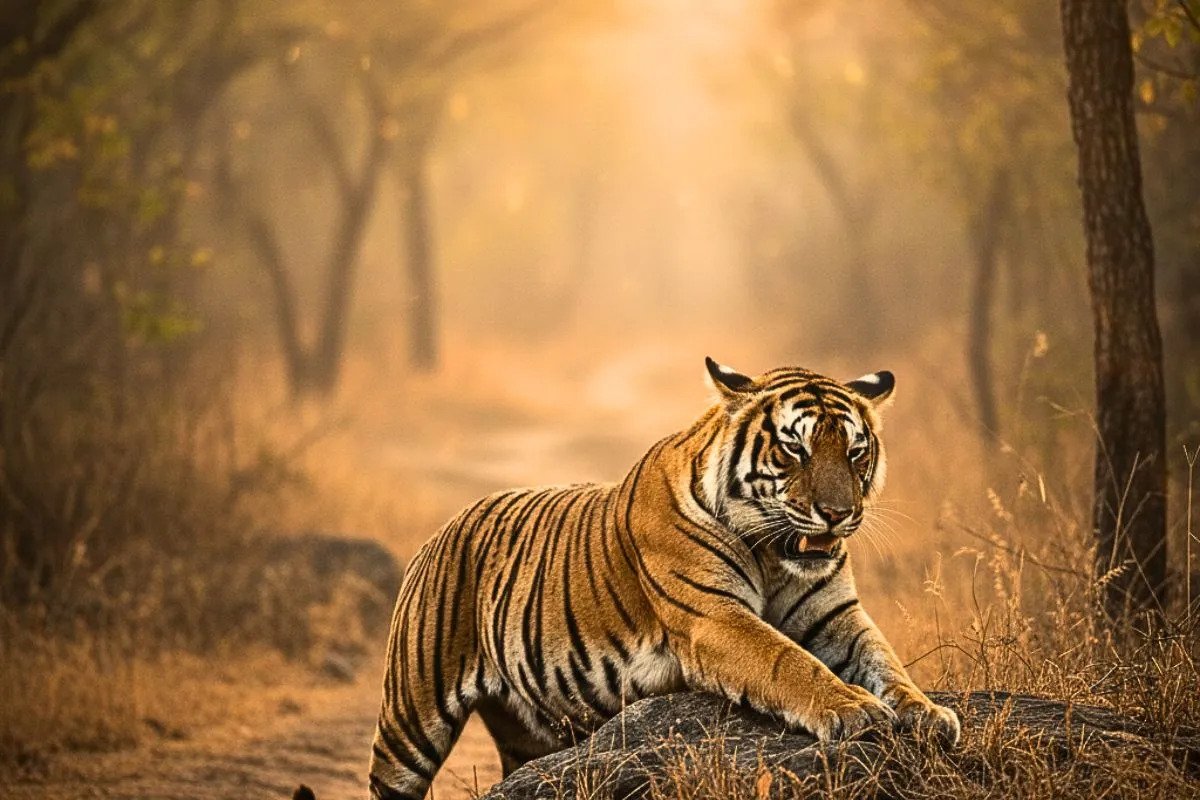
Ranthambore is probably the most photographed tiger reserve in the world. Its tigers are famous for being active in daylight, often lounging by lakes or walking past old ruins with a thousand year old fort rising above them. It’s the kind of scene that made Indian tigers famous.
The park sits where the Aravalli and Vindhya hills meet, near the town of Sawai Madhopur. It’s easy to reach from Jaipur and Delhi, which makes it a natural fit for Golden Triangle trips.
In this guide
Ranthambore quick facts
| Location | Sawai Madhopur district, Rajasthan |
|---|---|
| Area | About 1,334 sq km (tiger reserve), national park around 282 sq km |
| Established | 1980 (tiger reserve 1973) |
| Famous for | Daylight tiger sightings, Ranthambore Fort, lakes |
| Best time | October to June |
| Nearest town | Sawai Madhopur |
| Safari types | Jeep (6 seater) and canter (20 seater) |
Why visit Ranthambore?
Few parks combine wildlife and history like Ranthambore. Lakes like Padam Talao and Rajbagh, crumbling chhatris and banyan trees give every sighting a dramatic backdrop.Wildlife in Ranthambore
Ranthambore’s dry deciduous forest is home to more than tigers.
Tiger
Ranthambore’s tigers are relaxed and often seen in daylight, especially around the lakes in zones 1 to 5.
Leopard
Leopards live on the rocky edges of the park and are seen more in the outer zones.
Sloth bear
Seen fairly often, particularly in the hilly zones.
Mugger crocodile and birds
Crocodiles bask around the lakes, and the park has over 300 bird species.
Ranthambore safari zones
Ranthambore is divided into ten safari zones. Zones are allotted by the Forest Department and you stay in one zone for the whole safari.
Zones 1 to 5
The original core of the park, with the lakes, the fort and the most famous tiger territories.
Zone 6 (Kundal)
Open grassland and scrub, good for antelope and sometimes tigers.
Zones 7 to 10
Larger, quieter zones in the outer areas, with regular tiger and leopard sightings and fewer vehicles.
Safari types and timings
Choose between jeeps (6 seats) and canters (20 seats). Jeeps are quieter and better for photography; canters are cheaper and fine for groups. There are two shifts a day, morning and afternoon.How to book a Ranthambore safari
Safari permits for Ranthambore are issued by the Rajasthan Forest Department, with a fixed number of vehicles allowed in each zone and shift. You can book permits yourself on the official portal, fmdss.forest.rajasthan.gov.in.
Permits open well in advance and zones 1 to 5 go fast for winter weekends and holidays. Your zone is allotted by the system, so you can state a preference but not always get it.
If you’d rather not deal with portals, zone choices and timings yourself, we can plan the trip and apply for permits on your behalf, then arrange your stay, vehicle and guide. Government fees are charged at actuals and our service charges are listed separately in your quote, so you always know what you’re paying for. See our Cancellation and Refund Policy.
Best time to visit Ranthambore
October to February
Cool, pleasant and very popular. Great light for photography.
March to June
Hot, but the best tiger sightings around the lakes and waterholes.
July to September
Zones 1 to 5 close for the monsoon; some outer zones may stay open.
How to reach Ranthambore
By air
Jaipur International Airport is about 160 km away.
By train
Sawai Madhopur Junction is about 11 km from the park, with direct trains from Delhi, Mumbai and Jaipur.
By road
About 3.5 hours from Jaipur and 6 to 7 hours from Delhi.
Where to stay near Ranthambore
Most stays are along Ranthambore Road between Sawai Madhopur and the park gates, with options from simple guesthouses to luxury lodges.Suggested Ranthambore itinerary
Here’s a simple plan that works for most first time visitors. We’ll tailor it to your dates and interests.
- Day 1: Take a morning train from Delhi or Jaipur, check in and do an afternoon safari.
- Day 2: Morning and afternoon safaris, with a visit to Ranthambore Fort in between.
- Day 3: Final morning safari and onward travel.
Tips from our safari team
- Book jeeps rather than canters if photography matters to you.
- Visit Ranthambore Fort and the Ganesh temple; it’s a great break between safaris.
- Kuno, home of India’s cheetahs, is within driving distance for a longer trip.
- Wear muted greens, browns or khaki, and skip perfume. Bright colours and strong smells can disturb animals.
- Carry your original photo ID. It must match the name on your permit.
- Keep your voice low and never ask the driver to go off the track or crowd an animal.
Ranthambore packages
Ready made trips you can book as they are or adjust to your dates. Prices are confirmed in a written, itemised quote.
Photos of Ranthambore


Ranthambore safari FAQs
Which is the best zone in Ranthambore?
Zones 1 to 5 are the most famous because of the lakes and historic tiger territories. Zones 6 to 10 are bigger and quieter, with regular sightings.
Jeep or canter in Ranthambore?
Jeeps are smaller and better for photography. Canters are cheaper and fine for families and groups.
Can I choose my zone in Ranthambore?
You can state a preference, but zones are allotted by the Forest Department system.
How far is Ranthambore from Jaipur?
About 160 km, around three and a half hours by road.
Is Eagle Safaris the official booking website for Ranthambore?
No. Eagle Safaris is a private travel company. Permits for Ranthambore are issued by the Rajasthan Forest Department and can be booked directly at fmdss.forest.rajasthan.gov.in. We plan your trip and can apply on your behalf, with our service charges shown separately.