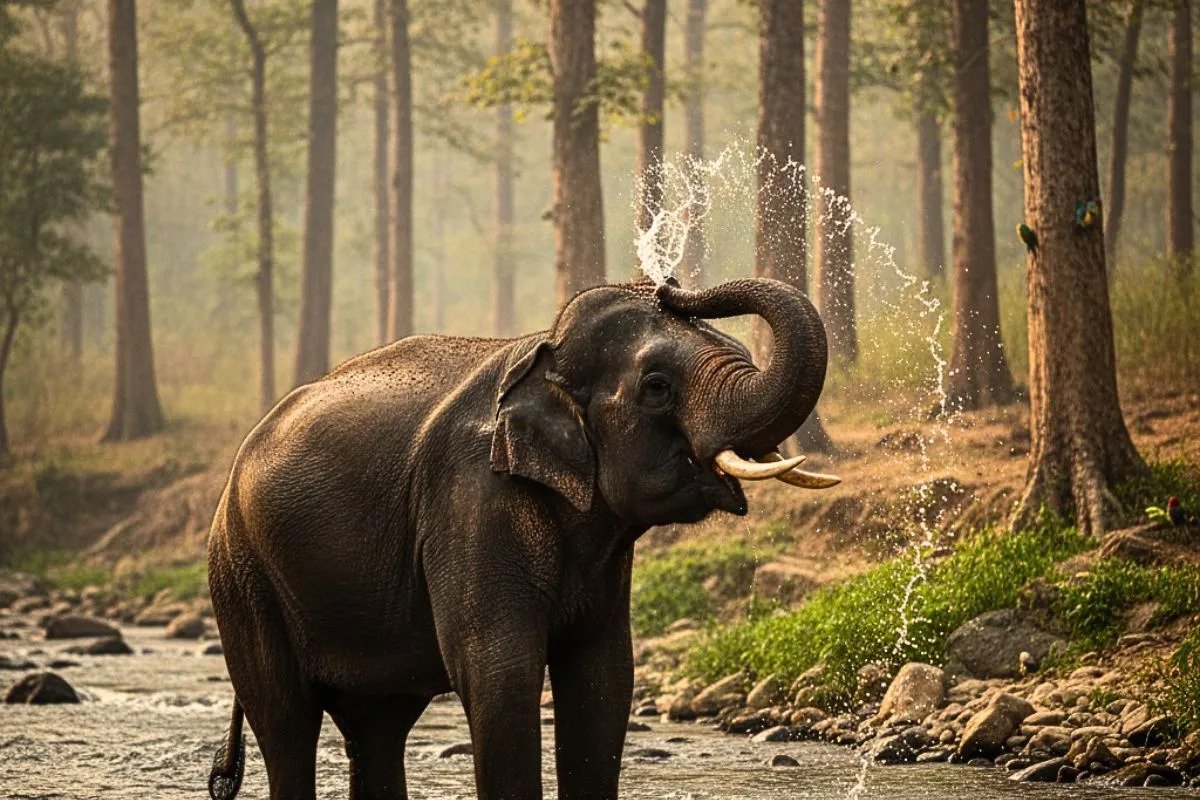
Dudhwa is what the terai looked like before most of it was turned into farmland: tall elephant grass, sal forest, slow rivers and wetlands right up against the Nepal border. It’s one of the few places in India where you can see tigers, rhinos and swamp deer in the same landscape.
It’s also refreshingly quiet. You won’t find long queues of jeeps here, which makes Dudhwa a favourite with photographers and birders who want time and space.
In this guide
Dudhwa quick facts
| Location | Lakhimpur Kheri district, Uttar Pradesh, on the Nepal border |
|---|---|
| Area | About 490 sq km (national park) |
| Established | 1977 |
| Famous for | Tiger, one horned rhino, swamp deer, birding |
| Best time | November to May |
| Nearest town | Palia Kalan |
| Safari types | Jeep, plus rhino area visits |
Why visit Dudhwa?
Dudhwa is for people who enjoy wild, unhurried safaris. Rhinos were reintroduced here in 1984 from Assam and Nepal and have done well, and the grasslands hold some of the largest herds of barasingha (swamp deer) left in India.Wildlife in Dudhwa
Big mammals, wetland birds and reptiles all share the Dudhwa landscape.
Swamp deer (barasingha)
Dudhwa and nearby Kishanpur hold large herds of swamp deer. Watching a herd in the wet grasslands is classic terai.
One horned rhino
Rhinos live in a protected rhino area inside the park. Visits are arranged by the Forest Department, subject to availability.
Tiger
Tigers are present throughout, though the tall grass makes them harder to see than in Central India.
Birds
Over 450 species, including the Bengal florican, swamp francolin and many wetland birds in winter.
Dudhwa safari zones
The Dudhwa Tiger Reserve covers Dudhwa National Park and two nearby sanctuaries.
Dudhwa core
Grasslands, sal forest and wetlands, with swamp deer and tigers.
Rhino area
A protected area within the park for the reintroduced rhinos.
Kishanpur Wildlife Sanctuary
Known for big herds of swamp deer around the Jhadi Tal lake.
Katarniaghat Wildlife Sanctuary
Along the Girwa river, with gharials and Gangetic river dolphins.
Safari types and timings
Jeep safaris run in the morning and afternoon. Visits to the rhino area are organised separately by the Forest Department and may depend on conditions on the day.How to book a Dudhwa safari
Safari permits for Dudhwa are issued by the Dudhwa Tiger Reserve administration (Uttar Pradesh Forest Department), with a fixed number of vehicles allowed in each zone and shift. You can also arrange entry directly with the Forest Department.
Permits are usually easier to get than in the big Central Indian parks. Carry your photo ID, and check opening dates before you travel since they can shift with the weather.
If you’d rather not deal with portals, zone choices and timings yourself, we can plan the trip and apply for permits on your behalf, then arrange your stay, vehicle and guide. Government fees are charged at actuals and our service charges are listed separately in your quote, so you always know what you’re paying for. See our Cancellation and Refund Policy.
Best time to visit Dudhwa
November to February
Cool and misty with great birding. Mornings can be very foggy.
March to May
Warmer, with better visibility as the grass is burnt or cut. A good time for tigers and rhinos.
June to mid November
Monsoon and floods. The park is usually closed.
How to reach Dudhwa
By air
Lucknow Airport is about 230 km away.
By train
Dudhwa and Palia stations are nearby; Lakhimpur is the bigger rail hub.
By road
About 5 hours from Lucknow, and around 8 to 9 hours from Delhi.
Where to stay near Dudhwa
There are Forest Department stays inside and near the park, and simple private stays around Palia. Facilities are basic compared to the big parks, which is part of the charm.Suggested Dudhwa itinerary
Here’s a simple plan that works for most first time visitors. We’ll tailor it to your dates and interests.
- Day 1: Arrive from Lucknow, check in and take an afternoon safari in the Dudhwa core.
- Day 2: Morning in the grasslands for swamp deer, afternoon visit to the rhino area if available.
- Day 3: Morning trip to Kishanpur or Katarniaghat before heading back.
Tips from our safari team
- Pack for fog in winter; mornings can be grey until 10 am.
- If you love birds, plan at least one full morning at a wetland.
- Combine Dudhwa with Pilibhit for a complete terai trip.
- Wear muted greens, browns or khaki, and skip perfume. Bright colours and strong smells can disturb animals.
- Carry your original photo ID. It must match the name on your permit.
- Keep your voice low and never ask the driver to go off the track or crowd an animal.
Dudhwa packages
Ready made trips you can book as they are or adjust to your dates. Prices are confirmed in a written, itemised quote.
Photos of Dudhwa


Dudhwa safari FAQs
Can you see rhinos in Dudhwa?
Yes. Rhinos live in a protected rhino area inside the park, and visits are arranged by the Forest Department depending on conditions.
When is Dudhwa National Park open?
Usually from mid November to mid June. It closes for the monsoon.
Is Dudhwa good for birdwatching?
Very. More than 450 species have been recorded, and winter brings large numbers of wetland birds.
How far is Dudhwa from Lucknow?
About 230 km, or roughly five hours by road.
Is Eagle Safaris the official booking website for Dudhwa?
No. Eagle Safaris is a private travel company. Permits for Dudhwa are issued by the Dudhwa Tiger Reserve administration (Uttar Pradesh Forest Department). We plan your trip and can apply on your behalf, with our service charges shown separately.